
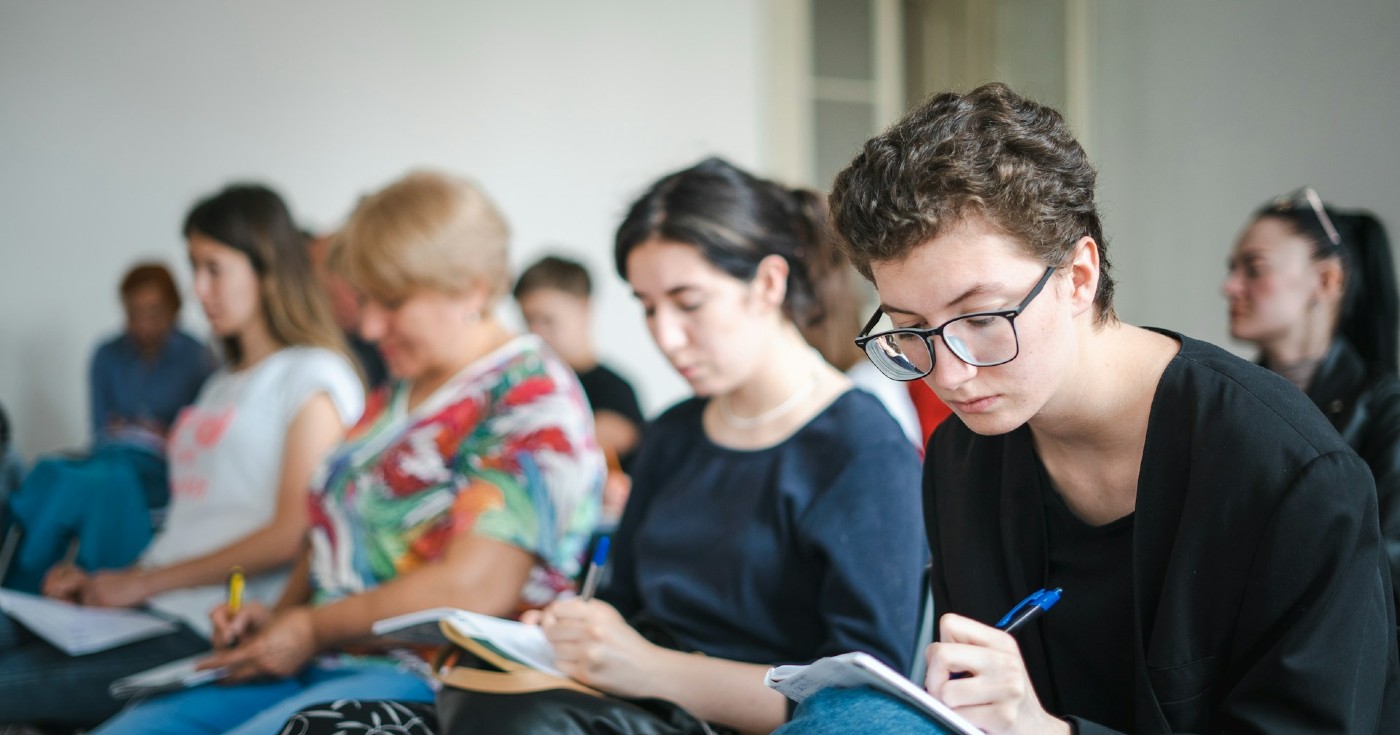
Addressing the gaps in professional training
We are inspired by stories from three frontline workers who recently reached out to us.
The first is from Jana, a social worker in Vienna, Austria, who wrote:
“I have recently come across your book and wanted to thank you both for the incredible work you have done with it. Never before has abuse become so clear, and have I felt more empowered to support my clients experiencing abuse. It has also made me profoundly sad to realize that I was taught next to nothing about abuse during my more than five years of university training. It has been shocking to see how little professionals know about abuse and how few offers there are to address the topic and support women through it.”
Jana goes on to describe how motivated she is to create resources for women affected by violence and abuse in her community.
The second person we heard from was Bev, who works at a first-stage transition house on the east coast of Canada. She uses her training and counselling experience to develop services for residents, training for front-line staff and internship opportunities for counselling students from a local university.
Bev shared her concern that the counselling interns don’t receive training to distinguish women’s experiences with violence and abuse from their more typical framework that sees conflict in relationships as mutual.
After reviewing our Best Practice Guide and Curriculum, she approached us about ways to address this gap and reduce unintentional harm by helpers.
The gaps in professional training
This brought us back to some very interesting information Erica Reed shared with us in the spring. Erica is a researcher from Illinois. In 2023, she reviewed the national curricula of 885 American university counselling programs and found that only 15 of these institutions had any required learning about gender-based violence. Eighty-five schools offered electives on the topic. She went on to say that these electives were often not offered on a regular basis and that the content was poor.
This last comment reminds me of some personal experiences I (Karen) have had with continuing education over the last six months.
The province of British Columbia, where Jill and I live, is in the process of regulating the counselling profession. My association, in anticipation of this, has required many of us to take additional training. I took five courses in all, from well-known online training providers.
One of the courses was called “Spousal Abuse Assessment and Reporting.” The name itself will cause many of us to be concerned. The term spousal abuse gender-neutralizes the issue, and putting reporting right in the title suggests that the focus of concern is misplaced.
The course was 15 hours long and came with a 400-page textbook. The course was appalling. It offers nothing that would help a counsellor provide good support to women experiencing abuse.
As the title suggests, the whole issue was gender neutralized. The course was written by a person with no named experience in the field and simply served to uphold what Jill and I call the Dominant Discourse.
One of the other courses I took was about the overlap between mental health challenges and substance use. There were definitely helpful aspects to this course, but there was no gender analysis and no acknowledgement of what we know to be true: often violence against women precedes mental health challenges and substance use issues for women.
Support for service providers
I realize that, at this point, I am “preaching to the choir,” as they say. Most of you receiving this newsletter have purchased our Best Practice Guide and Curriculum or taken our two-day training. You have experienced for yourselves the gap between whatever professional training you received and women’s lived experience of violence and abuse. Social workers, counsellors, doctors, lawyers… the list goes on of service providers who are working in the dark at best or with very harmful assumptions at worst.
We know that women and their children suffer when those who are supposed to support, empower and protect them are working from false narratives and, as a result, cause additional harm.
If you would like to read more about this, we suggest this article we wrote about women’s experiences of counsellors in particular and the unimaginable harm some women have experienced.
We would love to hear from you about initiatives you have in your community to get helpful information more readily into the hands of women or helping professionals. It always amazes us what individuals and agencies manage to accomplish with small budgets and a lot of determination, creativity and courage.
If you run a When Love Hurts support group and would like it listed on our website, please review the existing list and send us a note with your information.
Centring women’s lived experiences
Jill and I are focusing even more this year on education and training. We believe that what is unique and important about the When Love Hurts approach is that it is based entirely on women’s lived experience. We know what we know because we have listened to hundreds of women over many decades and learned from their stories, insights, and experiences.
We are looking forward to offering more training events throughout the 2026/2027 year and creating more opportunities for professionals and others who support women to learn from this approach.
We are also excited to be producing a second season of the When Love Hurts Podcast. You can find the first season here.
We have been so encouraged to discover what a powerful tool the podcast has become. It allows helpful, practical information to get quickly and freely into the hands of women experiencing abuse and those who support them. We are excited to continue building on what we began in Season One and tackle topics such as litigation abuse, post-separation abuse, and the ways abusive men are using “parental alienation” allegations as a weapon to keep women entangled in the nightmare that is family court.
What would you like Jill and me to explore and analyze? Are there questions that women ask you that make you stop and think, “That’s a really good question!” We would love to hear those questions.
Please direct your clients and colleagues to send us their questions. We will do our best to weave your questions into Season Two.
If you have not yet had a chance to take the two-day Certified Training for Professionals, we hope you will consider joining us. We have two upcoming training events. December 10th-11th, 2026 and February 4th-5th, 2027. You can register here.
Jill and I wish you all the best in the vital work you do!
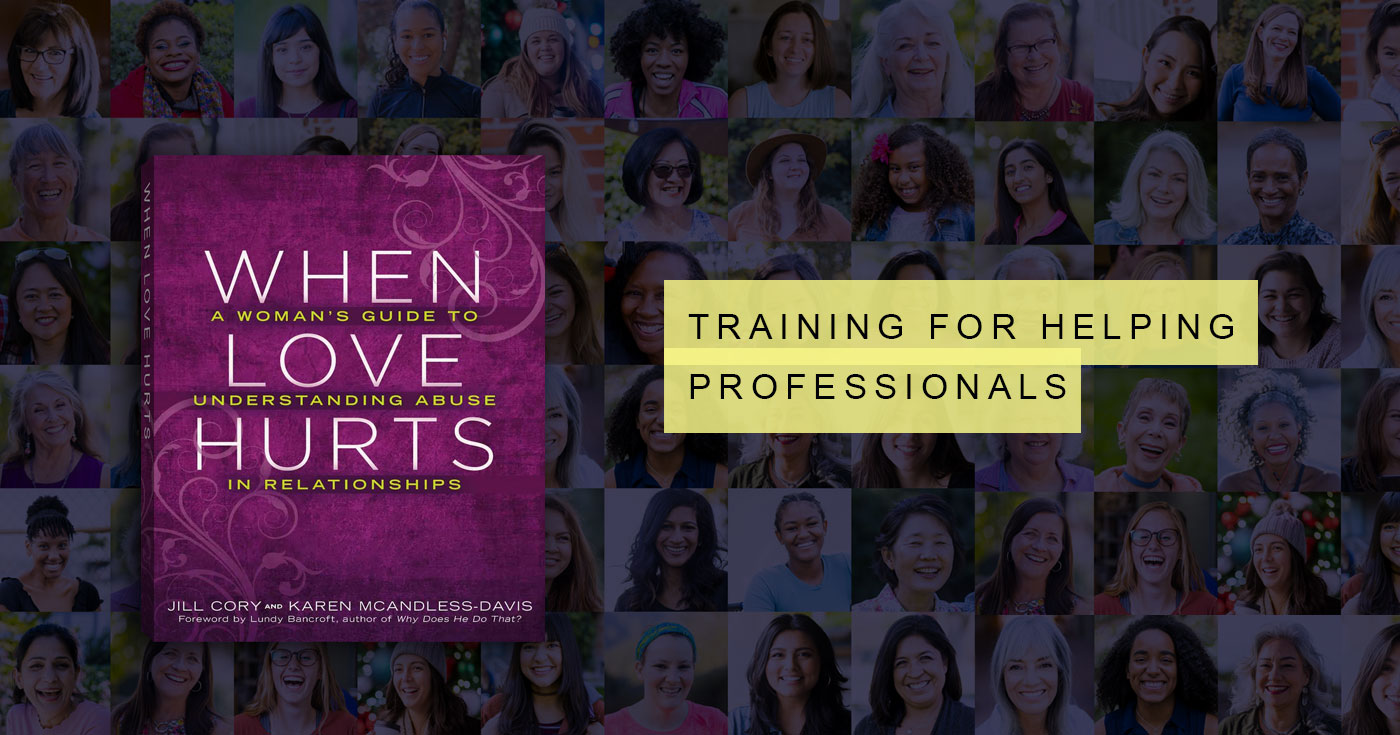

Season Two of the podcast is coming!
We are excited to announce that Season Two of the When Love Hurts Podcast is…
Happy International Women’s Day
International Women’s Day is on March 8. Today, we reflect on what the holiday means…
Episode 8: Understanding the healing journey
In this episode, we explore the healing journey for women who have experienced abuse.
New Year’s greetings!
We’re excited to share that all eight episodes of the When Love Hurts Podcast are…
Episode 7: Mothering, post separation abuse, and the legal system
How men’s abuse profoundly impacts mothering and how that abuse so often continues after separation…
Episode 6: The harms of help
How services can repeat dynamics of abuse.
Episode 5: Why abusive men are abusive
In this episode, we take on the question women ask again and again: Why is…
Welcome to Episode 4: The impacts of abuse for women
We want to thank you for joining us for this heavy, but essential, conversation. Be…